Both work fine here. The real decision comes down to household size, hard water maintenance, and upfront budget.
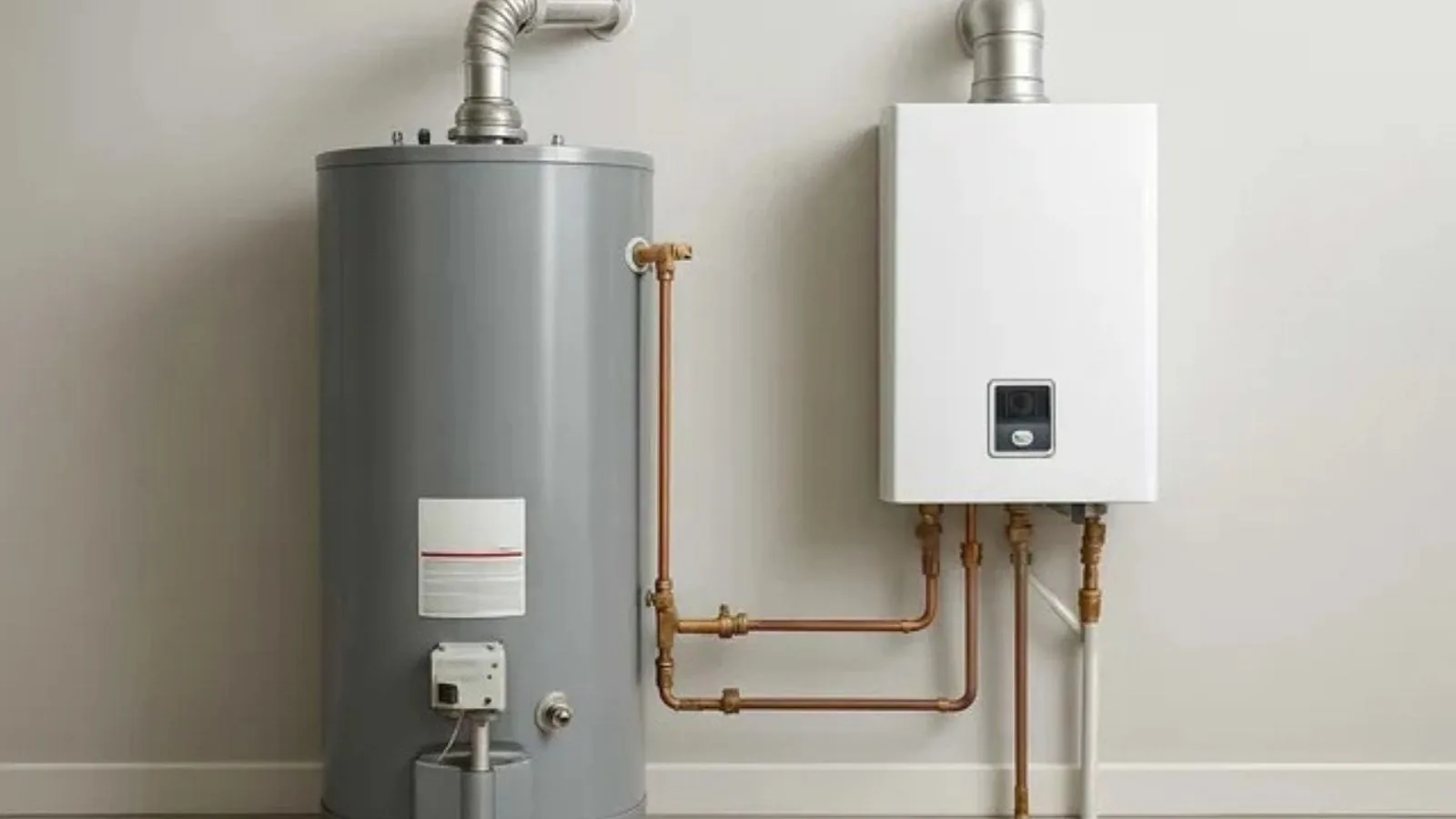
Neither tank nor tankless water heaters have a climate problem in the Houston area -- both work reliably here. The decision comes down to household hot water demand, how much upfront cost you're willing to take on for long-term savings, and whether you're prepared to keep up with descaling in an area with genuinely hard water.
Tank units cost less to install and are simpler to service; tankless units cost more upfront but use less energy over time and never run out of hot water mid-shower, provided they're sized correctly for the household.
It's also worth having this conversation before a water heater actually fails, not during an emergency replacement -- deciding between tank and tankless under time pressure, with the household currently out of hot water, isn't the ideal moment to weigh a decision that affects the next decade or more.
How Hard Water Affects Each Type Differently
A tank heater accumulates sediment on the tank floor over time, which an annual flush addresses. A tankless unit scales its heat exchanger instead, which shows up as reduced flow or an error code rather than a slow, invisible buildup.
Practically, that means a tankless unit in Pasadena needs a descaling flush on a stricter annual schedule than a tank heater might get away with skipping once or twice -- the consequences of neglect show up faster and more visibly.
Upfront Cost vs. Long-Term Savings
Tank units are generally the lower upfront cost option, and installation is usually simpler since it doesn't typically require new gas line or venting work.
Tankless units cost more to install, in part because many homes need a gas line upgrade or new venting to support one, but they use less energy over their lifespan since they're not maintaining a full tank of hot water around the clock.
Household Size Actually Matters Here
A tank heater's capacity is fixed -- once it's empty, everyone waits for it to reheat. A tankless unit heats on demand, so it doesn't run out, but it does have a maximum flow rate, which means a poorly sized tankless unit in a larger household can still struggle if multiple showers and a dishwasher run at once.
This is the detail that gets missed most often -- a tankless unit sized for a two-bedroom home installed in a five-bathroom house will disappoint, not because tankless doesn't work, but because it was undersized for the job.
Making the Actual Decision
If you're replacing a failed unit and want the simplest, least expensive path, a tank replacement sized to your household is usually the practical choice.
If you're planning to stay in the home long-term, have the gas capacity or are willing to upgrade it, and want to commit to annual descaling, tankless pays off over time. We'll walk through the real numbers for your specific household before you commit either way.
A Real-World Example
A two-bathroom Pasadena household replacing a failed 10-year-old tank unit often finds a like-for-like tank replacement is the simpler, faster path, especially if the existing gas line and venting are already sized correctly for a tank unit.
A larger household with four or more bathrooms and a habit of running the dishwasher and a shower simultaneously is a more realistic candidate for tankless, since the ongoing energy savings and endless hot water actually matter at that usage level.
Energy Costs Over a 10-Year Span
Tankless units generally use meaningfully less energy over a comparable period than a tank unit, since they're not maintaining a full tank of hot water continuously around the clock, only heating water as it's actually needed.
Over a decade of ownership, that efficiency difference adds up on the utility bill, which is part of the calculation homeowners weigh against the higher upfront installation cost when deciding between the two.
Tank vs. Tankless: Quick Comparison
| Factor | Tank | Tankless |
|---|---|---|
| Upfront cost | Lower | Higher |
| Typical lifespan (Pasadena water) | 8-12 years | 15-20 years with descaling |
| Hard water maintenance | Annual flush | Annual descaling, stricter |
| Hot water capacity | Fixed by tank size | Continuous, if sized correctly |
| Install complexity | Usually simple | Often needs gas/venting upgrade |
Need This Looked At?
Call now and a licensed Pasadena plumber can take a look.
FAQs
It can be, but only with consistent annual descaling. Skip that maintenance and a tankless unit will show problems faster than a neglected tank heater would.
Usually yes, though it often involves upgrading the gas line sizing and adding proper venting -- we scope that during the estimate before quoting the conversion.
For a smaller household with modest hot water demand, a tank heater is often the more cost-effective choice since the tankless efficiency gains matter more at higher usage volumes.
Correctly sized for the household's peak simultaneous demand, yes. Undersized for the household, they can still struggle when multiple fixtures run at once.
It varies significantly based on whether gas line or venting upgrades are needed, which is why we scope this during the estimate rather than quoting a flat number that might not apply to your home.
Not more frequent, but the annual descaling is more critical to keeping a tankless unit performing well, whereas a tank unit degrades more gradually if a flush gets skipped occasionally.
Most residential tankless units require electricity for ignition control, so they won't function without power the same way many tank units with standing pilot lights can.
Heat-pump hybrid tank units exist and offer some efficiency benefits of tankless while keeping tank simplicity, worth discussing if you want a middle-ground option.
Tankless units' lower overall energy draw can pair well with a solar setup, though this is a secondary consideration behind household size and hot water demand.
Yes -- a point-of-use tankless unit for a single remote bathroom is a reasonable way to test the technology before a larger investment.
Technically yes, though it involves reversing the gas and venting work done for the conversion, which makes it a real decision rather than something to try casually.
Ready To Get It Fixed?
Call Pasadena Express Plumbing for upfront pricing and same-day scheduling in Pasadena, TX.
☎ Call (281) 626-9205